APFC Panel
APFC Panel
APFC Panel
APFC Panel
APFC Panel
APFC Panel

APFC Panel

Price 249998.0 INR/ Piece

MOQ : 1 Piece

APFC Panel Specification

  • Cooling System
  • FAN
  • Connectivity Type
  • RS 485
  • Rated Operation Voltage
  • 415(+5% to -5%)
  • Operating Voltage
  • 415 Volt (V)
  • Protection Level
  • IP54
  • Cabinet Material
  • CRCA STEEL
  • Base Material
  • Other
  • Panel Type
  • APFC
  • Thickness
  • 14,16,18 Gauge
  • Rated Insulation Voltage
  • 50ka
  • Power Rating
  • 415V
  • Product Type
  • Electric Panel
  • Surface Finish
  • Powder Coated
  • Standard
  • Industrial
  • Surface Color
  • Other
  • Rated Voltage
  • 415 Volt (V)
  • Frequency (MHz)
  • 50 Hertz (HZ)
  • Usage & Applications
  • INDUSTRIES
  • Cable Type
  • COPPER FLEXIBLE
  • Phase
  • 3 PHASE
  • Warranty
  • 1 YEAR
  • Frequency
  • 50 Hertz (HZ)
  • Material
  • CRCA STEEL
  • Application
  • INDUSTRIES
  • IP Rating
  • Ip54
  • Display Type
  • Digital
 

APFC Panel Trade Information

  • Minimum Order Quantity
  • 1 Piece
  • Delivery Time
  • 1 Week
 

About APFC Panel

APFC Panel, which stands for Automatic Power Factor Correction Panel, is a crucial component in electrical systems, primarily used to improve the power factor automatically.

A low power factor indicates inefficient use of electrical power, often leading to increased energy costs, penalties from utility companies, and potential issues like higher current flow and equipment overheating.

Here is a detailed description of the panel, its function, and components:


Function and Purpose

The main purpose of an APFC panel is to maintain the power factor of the electrical system close to unity (or 1) by compensating for the lagging reactive power typically caused by inductive loads (like motors, transformers, and fluorescent lighting).

  • Correction Mechanism: It achieves this by automatically switching capacitor banks ON or OFF to introduce the required amount of leading reactive power (measured in kVAR), which counteracts the lagging reactive power from the loads.

  • Automation: The process is entirely automatic, responding to the real-time load demand and power factor fluctuations.

How an APFC Panel Works

  1. Monitoring: A microprocessor-based Power Factor Controller (PFC Relay) continuously monitors the power factor of the electrical system in real-time.

  2. Analysis and Decision: When the power factor drops below a predetermined desired threshold (e.g., 0.95 or 0.99 lagging), the controller calculates the amount of reactive power (kVAR) needed for correction.

  3. Activation: The controller signals the switching devices (typically contactors or thyristors) to connect the necessary steps (groups) of capacitor banks to the electrical network.

  4. Adjustment: As the load changes, the controller adjusts the number of capacitor steps connected to ensure the power factor is maintained at the target level, optimizing energy efficiency.

Key Components

An APFC panel typically consists of the following components:

  • Automatic Power Factor Controller (PFC Relay): The "brain" of the system. It monitors, calculates, and controls the switching operations.

  • Capacitor Banks: Groups of specially designed capacitors (rated in kVAR) that provide the leading reactive power to correct the power factor. They are switched in steps of various ratings.

  • Switching Devices:

    • Capacitor Duty Contactors: Used for standard, non-dynamic loads.

    • Thyristor Switches: Used for highly fluctuating or dynamic loads, offering faster and wear-free switching.

  • Reactors (or Detuned Filters): Often included in systems with significant harmonic distortion to protect the capacitors and the system from resonance.

  • Protection Devices: Include fuses and circuit breakers (like MCCBs/ACBs) to protect the capacitors and the panel from faults (overcurrent, short-circuit, etc.).

  • Enclosure and Busbars: The metal cabinet that houses all components, designed for robustness and safety.

Benefits of Using an APFC Panel

  • Reduced Electricity Bills: By maintaining a high power factor, the demand for apparent power (kVA) is reduced, which often translates to lower energy charges or avoidance of penalties imposed by utility companies for low power factor.

  • Improved Energy Efficiency: Minimizes $text{I}2text{R}$ (Copper) losses in cables and transformers, leading to energy savings.

  • Enhanced Equipment Lifespan: Reduces the current drawn from the supply, preventing overheating of cables, switchgear, and transformers.

  • Increased System Capacity: Frees up capacity in transformers and distribution lines by reducing the reactive power burden.

APFC panels are widely used in commercial buildings, hospitals, data centers, and various industries (like cement, textile, automotive, and manufacturing) that have large inductive loads.
Precision Power Management for Industries

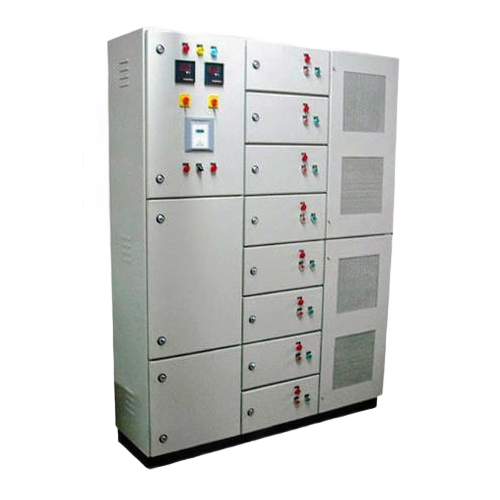
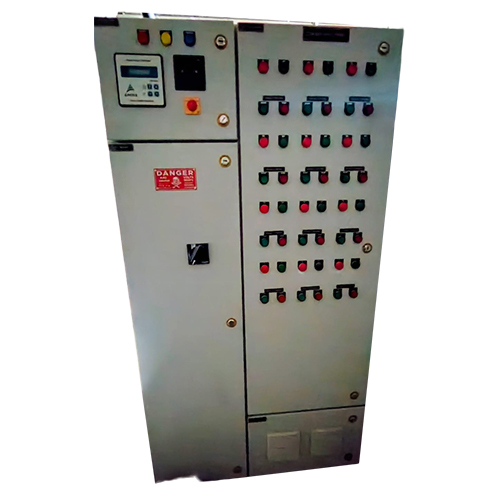
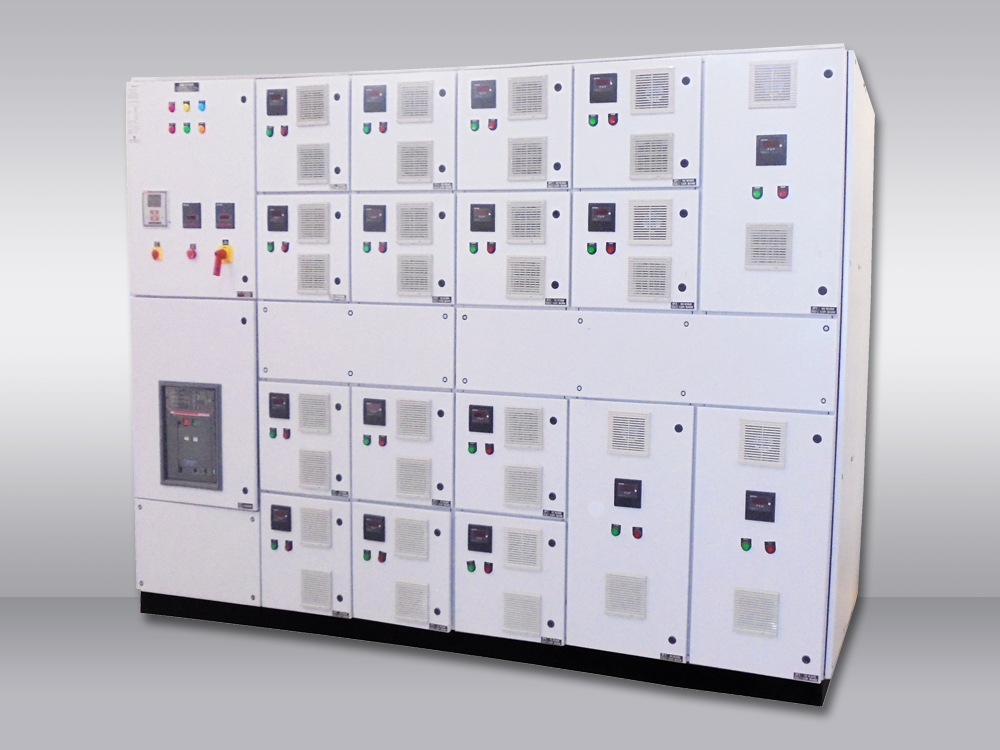
Designed specifically for industrial settings, this APFC Panel ensures stabilized power factor through digital automation. The unit helps mitigate energy losses and enhances the efficiency of large-scale operations running on a three-phase electrical system, making it ideal for manufacturers, suppliers, and traders.


Robust Construction and Safety Assurance

The enclosure is built from 14, 16, and 18-gauge CRCA steel and protected with a powder-coated finish to guarantee longevity in demanding environments. With an IP54 protection level, the panel is safe from dust ingress and water splashes, securing both equipment and personnel.


Advanced Technology and Easy Monitoring

Equipped with a digital display and RS 485 connectivity, the APFC Panel allows for convenient real-time parameter monitoring and remote operations. The integration with existing industrial automation systems is seamless, ensuring optimal power factor correction and streamlined maintenance.

FAQ's of APFC Panel:


Q: How does the APFC Panel help improve industrial energy efficiency?

A: The APFC Panel automatically regulates the power factor by switching capacitors in and out of the electrical circuit as needed. This reduces reactive power losses, minimizes electricity costs, and optimizes energy consumption in industrial settings.

Q: What materials are used in the construction of the APFC Panel?

A: The panel's cabinet is fabricated from CRCA (Cold Rolled Close Annealed) steel in 14, 16, and 18-gauge thickness, finished with a powder coating for improved durability and corrosion resistance, making it suitable for harsh industrial environments.

Q: When should an APFC Panel be installed in an industrial facility?

A: An APFC Panel is ideal for installation when industries experience poor power factor, frequent penalty charges from the utility, or when there is a need to enhance the overall efficiency and longevity of electrical equipment.

Q: Where can this APFC Panel be used effectively?

A: This APFC Panel is designed for a variety of industries, including manufacturing plants, processing units, and commercial complexes in India that operate on a 415V three-phase supply and require reliable power factor management.

Q: What is the process for connecting and monitoring this APFC Panel?

A: The panel supports copper flexible cable connections for reliable conductivity and is easily integrated with existing electrical infrastructure. Its digital display and RS 485 interface provide straightforward monitoring and control of operational parameters.

Q: How does the panel's IP54 rating benefit industrial users?

A: The IP54 rating ensures that the panel is protected against dust and water splashes, offering enhanced safety and reliability, especially in environments where exposure to particulate matter and moisture is common.

Tell us about your requirement
product

Price:

Quantity
Select Unit

  • 50
  • 100
  • 200
  • 250
  • 500
  • 1000+
Additional detail
Mobile number

Email


arrow